
Feeling new somewhere can take more energy than expected. Learn how familiarity, repeated routines, and simply showing up can slowly create comfort and connection.
There’s a question I don’t think we ask out loud very often:
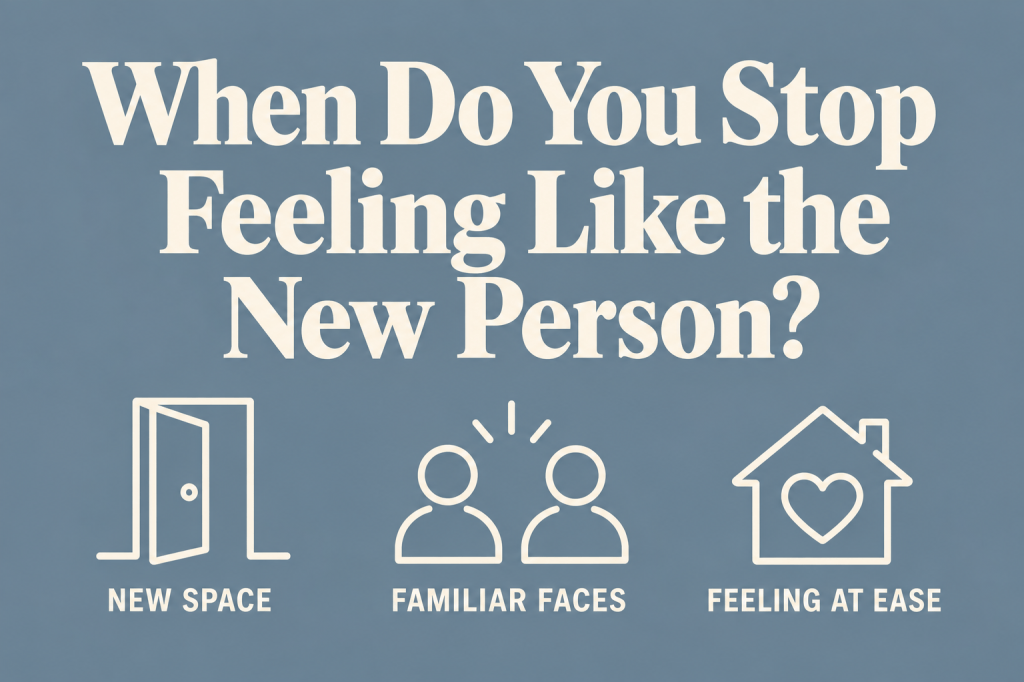
When do you stop feeling like the new person?
Not just at work.
At a gym.
A library.
A coffee shop.
A volunteer group.
Anywhere you’re trying to build a new routine.
I’ve noticed there’s a period where nothing is necessarily wrong, but everything requires a little more energy. You’re paying attention to where you should stand, how things work, who already knows each other, and where you naturally fit into the rhythm of the space.
I don’t usually mind going to certain places by myself.
But I’ve realized there’s a difference between enjoying your own company and feeling like you’re still the new person in the room.
That’s a feeling many of us experience in adulthood, especially when we’re trying something new.
🏋🏾 I Thought I Just Needed More Confidence
I noticed this most clearly in a Sunday CrossFit class I started attending the summer of 2025.
The class had a younger crowd than another class I regularly attended, and one of the first things we did almost every week was partner up for workouts.
During those first few Sundays, I was usually by myself while everyone else already seemed familiar with one another.
It wasn’t embarrassing.
I wasn’t upset.
I didn’t suddenly lose confidence.
I simply hadn’t become part of the rhythm of that environment yet.
Looking back, I think that’s an important distinction.
When you’re new somewhere, even ordinary moments can require more mental energy.
You’re learning where equipment is.
You’re figuring out how the class flows.
You’re remembering names.
You’re quietly observing the culture.
Nothing dramatic is happening, but your brain is constantly processing unfamiliar information.
That can feel surprisingly exhausting.
👋 Then Something Started Changing
After enough Sundays, something shifted.
Not overnight.
Not because I made some huge effort to become more outgoing.
It happened quietly.
Someone from another class I already knew started coming regularly.
Small conversations happened before and after class.
People began recognizing my face.
I recognized theirs.
Eventually, partnering up no longer felt uncertain.
And what stood out to me was that this happened before becoming close friends with anyone.
That realization surprised me.
I had assumed comfort came after belonging.
Instead, I realized comfort often comes first.
🧠 The Difference Wasn’t Confidence—It Was Familiarity
The more I thought about it, the more I realized I wasn’t becoming a different person.
The environment was becoming more familiar.
Psychologists sometimes refer to this as the mere exposure effect—the idea that we naturally develop greater comfort and preference toward people, places, and experiences simply because we’ve encountered them repeatedly.
That doesn’t mean we’ll become friends with everyone we see regularly.
It doesn’t guarantee connection.
But repeated exposure lowers the feeling of unfamiliarity.
Instead of constantly evaluating a space, your brain begins recognizing it as somewhere you’ve been before.
Recognition creates ease.
And that ease makes it easier to be yourself.
🌿 What Familiar Places Give Us
I think this is one of the quiet benefits of becoming a regular somewhere.
Not because every visit is exciting.
But because familiarity slowly reduces emotional friction.
You stop wondering:
- Where should I stand?
- How does this place work?
- Do I fit in here?
Instead, your energy shifts toward simply being present.
I’ve noticed the same thing can happen with:
- a neighborhood coffee shop
- the public library
- a walking trail
- a local bookstore
- a fitness class
- volunteer work
- even a workplace over time
At first, every environment feels mentally “loud.”
You’re aware of yourself.
You notice everyone else.
You wonder if you belong.
Then, almost without realizing it, your presence begins blending into the rhythm instead of interrupting it.
That quiet shift matters.
🤝 Comfort Often Comes Before Belonging
I think we sometimes put too much pressure on ourselves to immediately find “our people.”
But maybe that isn’t the first step.
Maybe the first step is simply becoming familiar.
Showing up.
Learning the rhythm.
Allowing recognition to happen naturally.
I’ve also noticed that familiar places make small social moments happen more easily.
Someone smiles because they’ve seen you before.
A quick conversation starts.
You recognize another regular.
Those moments may seem small, but they build something over time.
Connection often grows out of familiarity—not because we forced it, but because we gave ourselves enough time to stop feeling like strangers.
Novelty can be exciting.
But familiarity can be calming.
And during stressful or transitional seasons of life, that calm can be incredibly valuable.
🌱 Starting Over Somewhere New Again
I’m getting to experience this lesson again in real time.
I recently started a new role, which means I’m the new person all over again.
There is definitely some fear around starting over. Even when you’re excited about a change, there’s something comfortable about already knowing how everything works. You know the people. You know the routine. You know what’s expected of you.
Then suddenly, you’re back to learning everything again.
The work.
The people.
The routines.
The personalities.
The little things everyone else already seems to know without thinking about them.
But this time, I’m looking at being new a little differently.
I’ve already watched the newness wear off in other parts of my life.
I remember those early CrossFit classes when I didn’t know who I would partner with. Now, I don’t think twice about it. The environment that once required so much attention eventually became familiar simply because I kept showing up.
So with this new job, I’m reminding myself that I don’t have to force anything.
I don’t have to immediately figure out where I fit, make connections, or rush myself into feeling comfortable.
Right now, I can learn the environment.
I can become familiar.
I can let people become familiar with me.
And I can let the people and connections develop naturally.
That’s probably the biggest difference this time around. I know now that the newness will wear off.
There will eventually be a day when I know the routines without thinking about them. I’ll recognize more faces. People will recognize mine. The things that require extra mental energy right now will eventually become ordinary.
Sometimes starting over feels intimidating because we compare being new somewhere to the comfort we had somewhere else.
But we forget that the old place was new once, too.
And maybe that’s one of the most reassuring things to remember when starting over:
You don’t have to rush through being new. You just have to give yourself enough time to become familiar.
🌼 Self-Care Takeaways
- Feeling like the new person is a normal part of starting something new—not a sign that you don’t belong.
- Comfort often develops before deep friendships do. Give yourself time to become familiar with the environment.
- Becoming a regular can quietly improve emotional well-being by reducing uncertainty and creating a sense of ease.
- Small moments of recognition often grow from consistency rather than confidence.
- Sometimes the goal isn’t finding your people immediately. It’s simply showing up long enough for a place to start feeling like part of your life.
- Starting over can feel uncomfortable because you’re comparing a new environment to one that already became familiar. Remember: the old place was new once, too.
🌸 Final Reflection
For a long time, I thought feeling comfortable somewhere depended on finding the right people.
Now I think it often starts much earlier than that.
It starts with becoming familiar.
With walking through the same doors.
Following the same routine.
Seeing familiar faces.
Allowing yourself to become part of the background before becoming part of the conversation.
Sometimes consistency creates comfort before it creates belonging.
And sometimes that comfort is exactly what allows connection to happen at all.
Subscribe
Want more reflections on habits, connection, and self-care? Subscribe below to get updates when new posts go live.
Related reads:
How to Join a Friend Group (Or Why You Might Be Looking for Community Instead) – selfcareportfolio
How to Join a Friend Group When You’re the New Person – selfcareportfolio
How to Be a Regular (and Why It’s the Easiest Way to Make Friends as an Adult) – selfcareportfolio
 selfcareportfolio