
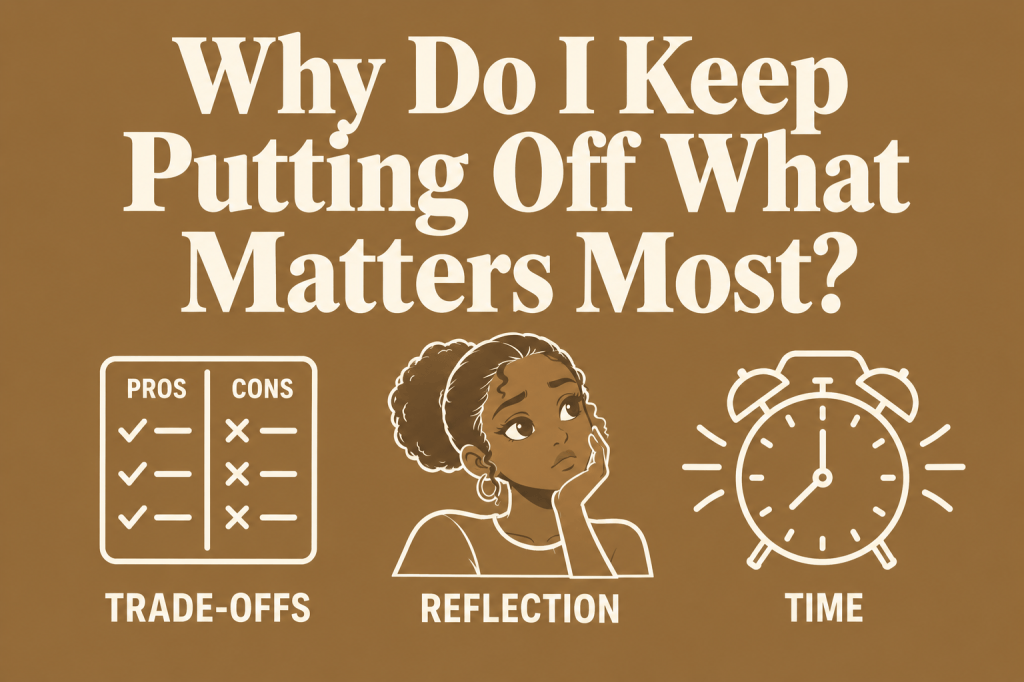
Why do we put off what matters most? Explore how everyday trade-offs, delayed decisions, and hidden costs shape our priorities and future opportunities.
I recently received a result I wasn’t proud of.
It was something I had been working towards this year. Something that mattered to me personally and professionally.
But when the result finally arrived, I had to admit something uncomfortable.
I hadn’t taken the preparation as seriously as I needed to.
It wasn’t that I didn’t care about the goal. I cared about it deeply. I had invested time, money, and energy into pursuing it.
But looking back, my everyday decisions hadn’t consistently reflected how important it was to me.
There were evenings when I could have spent more time learning, practicing, and building my understanding. Instead, I chose things that were more enjoyable in the moment.
A good television show.
Music.
An interesting online discussion.
A little more time scrolling or catching up on conversations.
None of those activities was necessarily a problem on its own.
But the choices added up.
And when I finally saw the result of those decisions, I realized something.
Every decision is a trade-off, including the decisions we make without thinking.
That realization made me reconsider not just how I spend my time, but what I’m willing to give up for the things I say matter most.
🌿 When My Actions Didn’t Match My Priorities
I think one of the more uncomfortable parts of adulthood is recognizing that wanting something and making it a priority aren’t always the same thing.
We can genuinely want to improve our finances, earn a credential, build healthier habits, develop stronger relationships, or learn a new skill.
But wanting the outcome doesn’t automatically mean we’re making the decisions necessary to move toward it.
That’s something I’ve had to confront recently.
I knew my goal required consistent preparation.
I understood that it wasn’t something I could approach casually and expect to accomplish.
Yet I often treated the time I needed to dedicate to it as negotiable.
If something more interesting came along, I could always study later.
If I was distracted, I could make up the time tomorrow.
If I didn’t get much done today, there was always another day.
Eventually, those postponed decisions became a pattern.
And the result reflected that.
What bothered me wasn’t simply that I hadn’t achieved what I wanted.
It was knowing that I hadn’t given myself the preparation I needed.
I had been committed to the idea of achieving something without consistently committing to the process behind it.
That distinction made me look at my priorities differently.
🧠 Every Yes Comes With a No
One concept I keep returning to is opportunity cost.
Every time we choose how to spend our time, attention, or energy, we’re also choosing what we won’t do with those resources.
An evening spent watching television might mean postponing a personal project.
An expensive purchase might mean contributing less toward a savings goal.
Taking on another commitment might mean having less time for rest.
Spending an hour in an online discussion might mean giving up an hour that could have been spent reading, exercising, studying, or connecting with someone.
The problem isn’t necessarily any one of those activities.
It’s that we don’t always recognize what we’re trading away.
I certainly didn’t.
When I chose entertainment over preparation, I was thinking about what I wanted to do at that moment.
I wasn’t always thinking about what that decision meant for something I wanted months later.
But those choices were connected.
Every yes comes with a no, even when we don’t consciously recognize what we’re saying no to.
And sometimes, the cost of those decisions becomes clear only after we’ve experienced the outcome.
⏳ When Avoiding the Work Creates More Work
This was probably the biggest realization for me.
I thought I was giving up my free time by dedicating more hours to preparation.
What I didn’t fully consider was how much additional time I might lose by not preparing.
Because I didn’t approach my goal with the seriousness it required, I now have to revisit something I had hoped to move beyond.
That means more time.
More money.
More effort.
And another opportunity to do the work I should have prioritized earlier.
In trying to avoid some of the difficult work in the present, I created more work for myself in the future.
That was difficult to acknowledge.
But seeing a measurable result made it impossible for me to ignore.
We often hear that we shouldn’t focus so much on the destination that we forget to enjoy the journey.
I agree that the process matters.
But I also think the destination can reveal something important about the journey we’ve been taking.
Sometimes, we reach an outcome and realize that the decisions leading up to it weren’t supporting what we wanted.
That doesn’t mean every disappointing outcome comes from poor choices. There are circumstances beyond our control.
But in my situation, I could recognize the connection between my preparation and my result.
And I didn’t like where those decisions had taken me.
Sometimes the easier choice today creates a harder situation tomorrow.
That lesson applies to much more than studying.
It can happen when we postpone financial responsibilities, avoid necessary conversations, repeatedly abandon routines, or delay taking care of something that will eventually demand our attention.
Avoiding the effort doesn’t always eliminate the cost.
Sometimes it increases it.
🌱 Not Making a Decision Is Also a Trade-Off
Another part of this realization is understanding that we don’t escape trade-offs by avoiding decisions.
Choosing not to act is still a choice.
I think about my decision to return to school in my 30s.
Going back required sacrifices.
There were expenses, assignments, exams, and evenings when I would have preferred doing something else.
I had to rearrange parts of my life to make room for education.
But that decision also opened opportunities that might not have been available to me otherwise.
If I had chosen not to return, I would have kept more of my time and money available in the short term.
But I also would have given up the possibility of pursuing certain opportunities that required additional education.
Neither path would have been free of trade-offs.
The same applies to other areas of life.
Choosing not to pursue a friendship may mean having more time to yourself, but it can also mean missing the opportunity to build a meaningful connection.
Choosing not to create a budget may feel easier today, but it can make it harder to understand where your money is going.
Choosing not to try something new protects you from some discomfort, but it can also prevent you from discovering an activity, skill, or community you might enjoy.
Of course, we can’t pursue every opportunity.
And not every opportunity is worth pursuing.
But I think it’s important to recognize that staying where we are has a cost, too.
We don’t stop making trade-offs when we avoid decisions. We simply allow some of those trade-offs to happen without much thought.
⚖️ Not Every Trade-Off Has to Be About Achievement
I also don’t want to turn this realization into the idea that every hour of our lives needs to be productive.
That’s not what self-care means to me.
Sometimes the better trade-off is choosing rest instead of another obligation.
Sometimes it’s spending time with friends instead of working late.
Sometimes it’s enjoying a movie, listening to music, taking a walk, or having an afternoon with no particular goal.
Those choices have value.
Rest and enjoyment aren’t automatically distractions from building a meaningful life. They’re part of it.
The distinction I’m learning to make is between choosing something because it genuinely supports my well-being and choosing it repeatedly because I’m avoiding something important.
Watching a show after a productive day can be enjoyable.
Watching several hours of television while repeatedly postponing a commitment I genuinely want to fulfill can leave me feeling differently afterward.
The activity might be the same.
But the circumstances and trade-offs are different.
And that’s why I don’t think the answer is simply to eliminate everything enjoyable.
It’s to become more intentional.
To understand when I’m resting, when I’m enjoying myself, and when I’m using those activities to put off something I know requires my attention.
The goal isn’t to sacrifice everything for achievement. It’s to make choices that reflect the life we actually want to live.
🎯 Choosing What I’m Willing to Give Up
One thing this experience has changed is how I think about sacrifice.
Previously, I often focused on what I wanted to accomplish.
The credential.
The financial goal.
The healthier routine.
The completed project.
The next opportunity.
But I wasn’t always giving the same attention to what those goals required me to do less often.
And that’s where the trade-offs become real.
If I want to dedicate more time to learning, something else has to occupy less of my schedule.
If I want to save more money, I may need to reconsider some purchases.
If I want stronger relationships, I need to make room for the conversations and shared experiences that help maintain them.
If I want to become better at something, I have to accept that the process may be repetitive, uncomfortable, or less exciting than other things I could be doing.
I can’t give every priority the same amount of attention at the same time.
And I don’t have to.
Different seasons of life require different decisions.
Right now, I’m learning to take my commitments more seriously by being clearer about what I’m willing to reduce temporarily.
Not forever.
Not because entertainment, leisure, or social activities are bad.
But because something important to me requires more of my attention during this season.
I also want to become more present in the process itself.
Instead of viewing the work as something standing between me and the life I want, I’m learning to see it as part of building that life.
The time spent practicing, learning, making mistakes, and improving isn’t separate from the achievement.
It’s how I get there.
And even before the final result arrives, that effort can leave me with something valuable.
Greater understanding.
More discipline.
Better habits.
A stronger foundation for whatever comes next.
A worthwhile trade-off isn’t always enjoyable in the moment. Sometimes its value becomes visible through what it allows us to build over time.
🌼 Self-Care Takeaways
- Pay attention to the difference between your stated priorities and your daily decisions. Wanting something matters, but consistent action is what helps move it forward.
- Remember that every yes comes with a no. Time, money, and attention are limited. Choosing one thing often means giving up another.
- Consider the future cost of postponing something important. Avoiding difficult work today can sometimes create more work, expense, or stress later.
- Recognize that not making a decision is also a trade-off. Staying comfortable may protect something in the present while limiting an opportunity in the future.
- Make room for rest and enjoyment intentionally. Not every valuable decision has to produce an achievement. Self-care includes recovery, pleasure, and connection.
- Decide what you’re willing to do less often during this season of life. You don’t have to give up everything. Sometimes you simply need to make more room for what matters most right now.
❓ Frequently Asked Questions
Why do I keep putting off things that are important to me?
Sometimes important goals require effort with delayed rewards, while distractions and enjoyable activities offer immediate satisfaction. Recognizing this difference can help you create routines and boundaries that support your priorities.
What does it mean that every decision has a trade-off?
A trade-off means choosing one option involves giving up some benefit of another. This applies to how we spend money, time, energy, and attention. Even deciding not to act can mean giving up an opportunity.
How can I make better trade-offs in everyday life?
Start by identifying what matters most during your current season. Then consider whether your daily choices support those priorities. You don’t need to eliminate leisure or enjoyment, but you may need to reduce activities that repeatedly interfere with commitments you value.
🌸 Final Reflection
I don’t particularly enjoy looking back at decisions I wish I had made differently.
But I also recognize that disappointment can reveal something important.
Sometimes we don’t fully understand the cost of our choices until we see where they’ve taken us.
That’s what happened to me.
I reached an outcome I didn’t want, and I had to acknowledge that the trade-offs I’d been making weren’t helping me move toward something I genuinely cared about.
I can’t change those decisions now.
But I can change the ones I make next.
And perhaps that’s one of the more useful parts of growing older: learning that we don’t have unlimited time, energy, or opportunities to give everything equal attention.
We have to choose.
Sometimes those choices are easy.
Sometimes they require giving up something enjoyable now for something meaningful later.
And sometimes the best decision is to slow down, rest, or protect what we’ve already built.
The question isn’t whether we’re making trade-offs.
We’re making them every day.
The question is whether those trade-offs are helping us build the life we actually want.
Subscribe to Self-Care Portfolio for more reflections, gentle productivity, and the Solo-Money Series.
Related reads:
The Highest Form of Self-Care Is Focusing on Your Own Life – selfcareportfolio
Why Studying Outside the House Makes Consistency Easier for Working Adults – selfcareportfolio
Going Back to School in My 30s Taught Me Something I Didn’t Expect – selfcareportfolio

