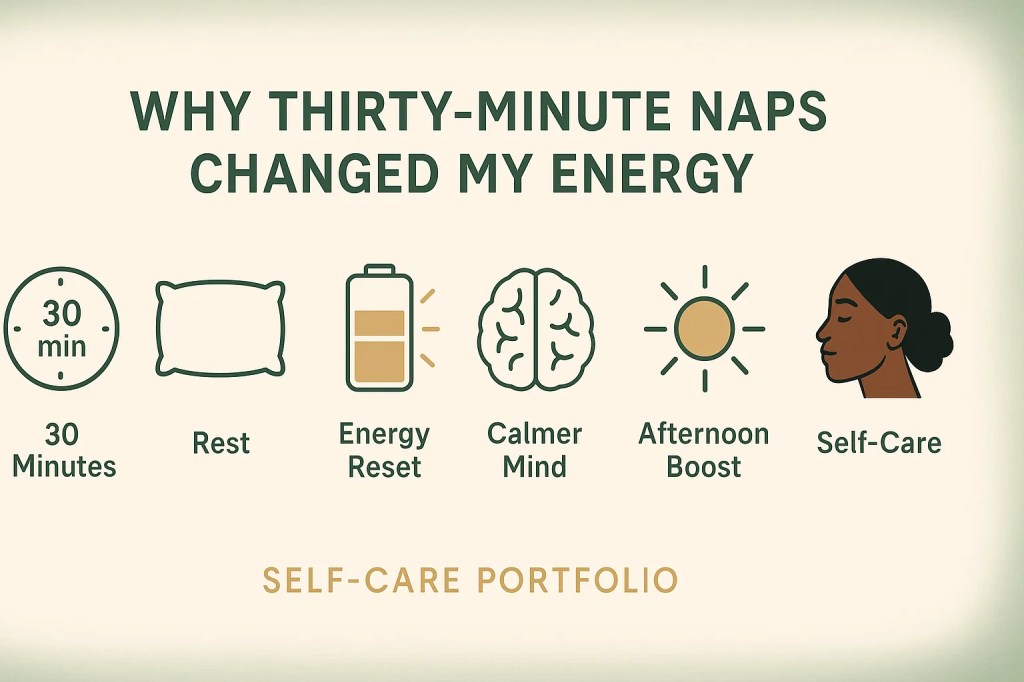
A thirty-minute nap can boost energy, reduce anxiety, and give your evenings back. Here’s how short naps helped me reset my mood and stay productive.
A simple self-care shift that reduced my anxiety, boosted my productivity, and helped me stop losing my evenings to exhaustion.
For years, my after-work routine looked the same:
I’d eat, relax on the couch, turn on something comforting…
and then wake up hours later, groggy, disoriented, and somehow more tired than before.
Those long naps felt good for a moment, but they wrecked everything afterward:
• I stayed up too late
• I woke up tired
• My evenings disappeared
• I avoided tasks I actually needed to do
• My anxiety spiked because I felt behind on everything
And the worst part?
I thought naps were supposed to help me feel better.
It wasn’t until I started school again and had to protect my energy that I realized something:
Long naps drain you. Short naps recharge you.
When I switched from “crashing on the couch” to 20–30 minute power naps, everything shifted.
☀️ Why Short Naps Actually Work
Science (and experience) says the same thing:
20–30 minutes = peak restoration
45+ minutes = sleep inertia (grogginess + low motivation)
A short nap gives your brain:
• a reset
• a mood lift
• more focus
• more emotional regulation
• more energy to finish the day
A long nap pushes you into deeper sleep stages…
which is why you wake up feeling like you ran a marathon in your dreams.
🌙 What Changed for Me When I Switched to Power Naps
Once I shortened my naps, I noticed real shifts:
✔ I stopped waking up groggy
✔ I had energy to study after work
✔ I actually left the house instead of losing the whole evening
✔ My anxiety eased — because I didn’t feel behind
✔ I went to bed earlier
✔ My mornings felt lighter
I’ve learned something about myself:
I don’t need more sleep. I need better rest.
Now I nap early ideally before 5 PM and only for 20–30 minutes.
It’s just enough to refresh me without disrupting the rest of my day.
🌼 How I Take a Power Nap That Actually Helps
Here’s my personal method (simple and realistic):
💛 1. Set a 30-minute timer
No “winging it.” The timer is the self-care.
💛 2. Keep the room lightly lit
Too dark = too deep.
💛 3. Don’t get in the bed
Couch, chair, or a blanket on top of the covers only.
💛 4. Nap early
Before late evening so it doesn’t hijack your nighttime sleep.
💛 5. Get up and move after
A drink of water or a quick stretch seals the recharge.
🌿 Why This Works for Emotional Wellness, Too
A 30-minute nap isn’t laziness.
It’s regulation.
Short naps help with:
• lowering stress
• stabilizing mood
• reducing anxiety
• resetting the nervous system
• sharpening focus
They create a moment of pause — a reset button in the middle of a long day.
🌸 Self-Care Takeaways
💛 1. You’re not tired — you’re overstimulated.
Your brain needs a quick reset, not a long escape nap.
💛 2. A 30-minute nap gives your evening back.
Energy to study, clean up, go outside, or just be present.
💛 3. Power naps improve emotional regulation.
You wake up clearer, not heavier.
💛 4. A good nap is self-respect, not laziness.
It’s a boundary with your energy, not a weakness.
❓ FAQ
How long should a nap be?
20–30 minutes is ideal. Anything longer leads to grogginess.
What’s the best time to nap?
Early afternoon or before 5 PM to avoid messing with nighttime sleep.
Why do long naps make me feel worse?
You slip into deeper sleep stages and wake up more sleepier.
Can short naps help with productivity?
Yes — they boost mood, focus, and energy to finish the day.
Subscribe to Self-Care Portfolio
If this post resonated, subscribe to the Self-Care Portfolio for more reflections and self-care experiments. Each post is a gentle reminder that progress doesn’t have to be perfect to count.
Related reads:
Reclaim Your Time: Active vs Passive Habits That Build You Back – selfcareportfolio
 selfcareportfolio