Learn how to show your professional value beyond your job title. Build adaptable skills, stay confident in a shifting job market, and grow your career steadily.
There’s an old saying: don’t put all your eggs in one basket.
Lately, that saying applies to careers more than ever. The job market is shifting, companies restructure overnight, and even strong performers can find themselves navigating unexpected changes. In a world where stability is no longer guaranteed by a single job title, the most important thing you can do is stay adaptable, broaden your skill set, and build a footprint that reflects your full value.
Sometimes the hardest part of career growth isn’t learning new skills it’s learning how to recognize and show the value you already bring. Most of us work quietly, do what needs to be done, and move on to the next task without ever acknowledging how much we’ve grown. But job titles rarely tell the full story. Who you are professionally is shaped by the rooms you enter, the skills you practice, the communities you choose, and the curiosity you keep alive.
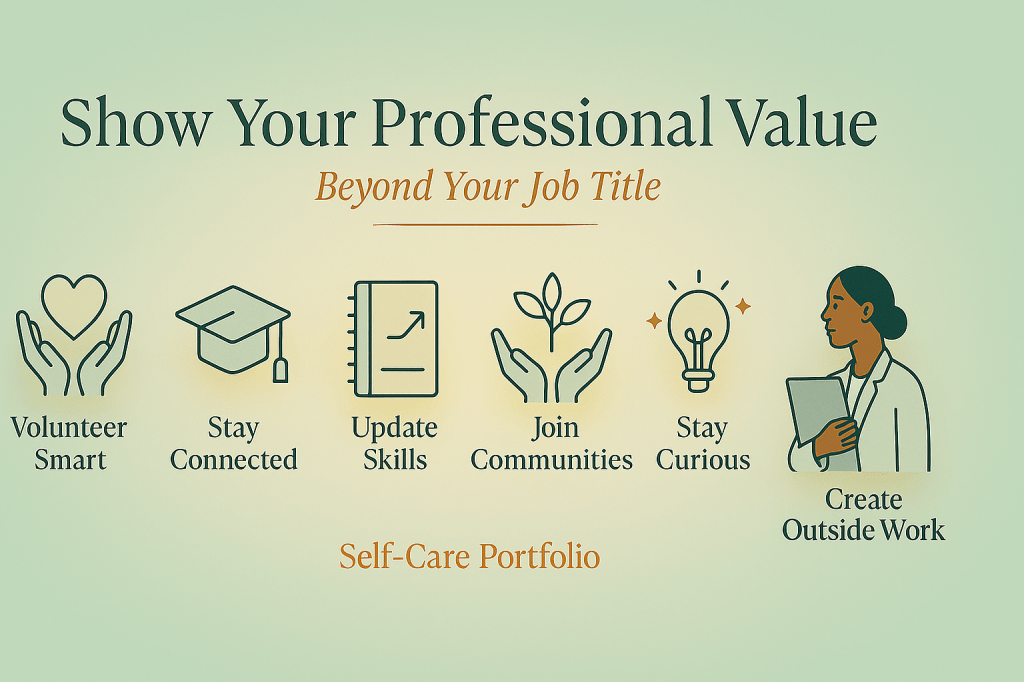
Here are six simple ways to elevate your skills and show your value beyond a title. Here’s the deeper story behind each one and how these habits have shaped my own growth without needing permission or a promotion first.
💡 1. Volunteer Where It Makes Sense
Alumni groups, professional associations, Young Leadership Councils, and Young Professional Associations (often go up to age 42) are underrated spaces for growth.
Volunteering is one of the fastest ways to:
- gain leadership experience
- practice public speaking
- strengthen decision-making
- build community
- learn how organizations actually run
I’ve grown a lot from saying “How can I help?” in volunteer settings. These environments give you access to people with varied careers and wider perspectives which is its own kind of education.
💡 2. Stay Connected to Your Alma Mater
People underestimate how powerful alumni networks really are. Not just for job options but for confidence, mentorship, and direction.
Professors become references, classmates turn into peers, and students can become connections who open unexpected doors. Staying connected keeps you in a cycle of learning, visibility, and growth.
Even following alumni pages or attending occasional events can create the kind of familiarity that becomes opportunity later.
💡 3. Update What You’ve Learned
One of the biggest mistakes we make is forgetting to document our progress. We look back after months or years and can’t identify what we actually learned even though we’ve grown significantly.
A habit that helped me:
Whenever I learn something new, I ask ChatGPT a combination of these questions:
- What skill is this?
- What does this demonstrate?
- How do people usually list this on résumés?
Then I update my LinkedIn, résumé, or notes.
You’d be surprised how much value you’re adding in real time you just need to name it so the world can see it too.
💡 4. Join Communities That Grow With You
Not every career boost comes from networking events or industry mixers. Some of the best skills grow in community and service-based spaces:
- Food banks
- Habitat for Humanity
- Dress for Success
- Boards and Committees
These spaces build:
- empathy
- leadership
- responsibility
- follow-through
- teamwork
- communication
- problem-solving
Community gives you a kind of grounded confidence that you can’t always get at work.
💡 5. Keep Curiosity as a Career Skill
Curiosity is one of the most underrated forms of professional development.
Workshops, online classes, conferences, and local events can reshape how you think about your abilities.
Curiosity keeps your career alive by:
- helping you adapt
- expanding your skill set
- sparking new ideas
- preventing burnout
- strengthening confidence
Career growth doesn’t come from trying to do everything it comes from being curious about the right things.
💡 6. Create Outside of Work to Stay Inspired
This one is personal.
The start of my career, I tied my identity to my job. Work was where I “proved myself,” and it didn’t leave room for much else.
Creating outside of work helps with that.
Whether it’s:
- writing
- designing
- blogging
- building your digital brand
- learning a creative skill
…creating gives you ownership again. It reminds you that your career is only one part of your life not the whole story.
Your creativity becomes the breathing room that fuels your confidence.
🌿 Self-Care Takeaways
Here’s what these six habits have taught me:
✔ Your value isn’t defined by your job title it’s defined by your growth.
✔ Volunteer work and community roles can build more skills.
✔ Curiosity is a career skill, not just a personality trait.
✔ Updating your progress keeps you from forgetting your strengths.
✔ Creating outside of work is its own form of self-care.
✔ Community shapes you in ways solitary work never will.
✨ Reflect & Apply
- Which of these six habits do you already practice without realizing it?
- Where could you add a bit more curiosity back into your career?
- Which communities feel aligned with the season you’re in?
- What would happen if you documented your progress more intentionally?
Small shifts create long-term growth. These habits help you build a career that grows with you, not just around you.
🌿 FAQ
How do I grow in my career without changing jobs?
You can grow by expanding your skills outside your job title. Volunteering, joining alumni or professional groups, taking workshops, documenting what you learn, and creating outside of work all build new experience without needing a new role. These habits strengthen confidence, leadership, and visibility in quiet but powerful ways.
What are quiet ways to show professional value?
You show professional value through consistent behavior, not announcements. Examples include following through reliably, communicating clearly, improving small processes, documenting what you learn, taking initiative in low-pressure ways, staying curious, solving problems early, and practicing integrity in daily decisions. Quiet value is demonstrated through contribution, clarity, and consistency not just titles or self-promotion.
What’s the best way to stay inspired professionally?
Inspiration grows through habits that refill your energy, not constant motivation. Effective ways to stay inspired include changing your environment (classes, workshops, alumni events), staying curious about new ideas, creating outside of work, tracking your progress, connecting with people who are also growing, and protecting your mental and emotional bandwidth. The most sustainable inspiration comes from curiosity, community, and creativity not pressure.
Subscribe
Want more self-care strategies and career reflections? Join to get new posts sent straight to your inbox.
 selfcareportfolio