
My Take: The 3% Surcharge on Credit Cards (and How Small Fees Quietly Add Up)
I noticed small 3% surcharges stacking up at restaurants. Here’s how using debit and mindful habits helped me manage rising costs.
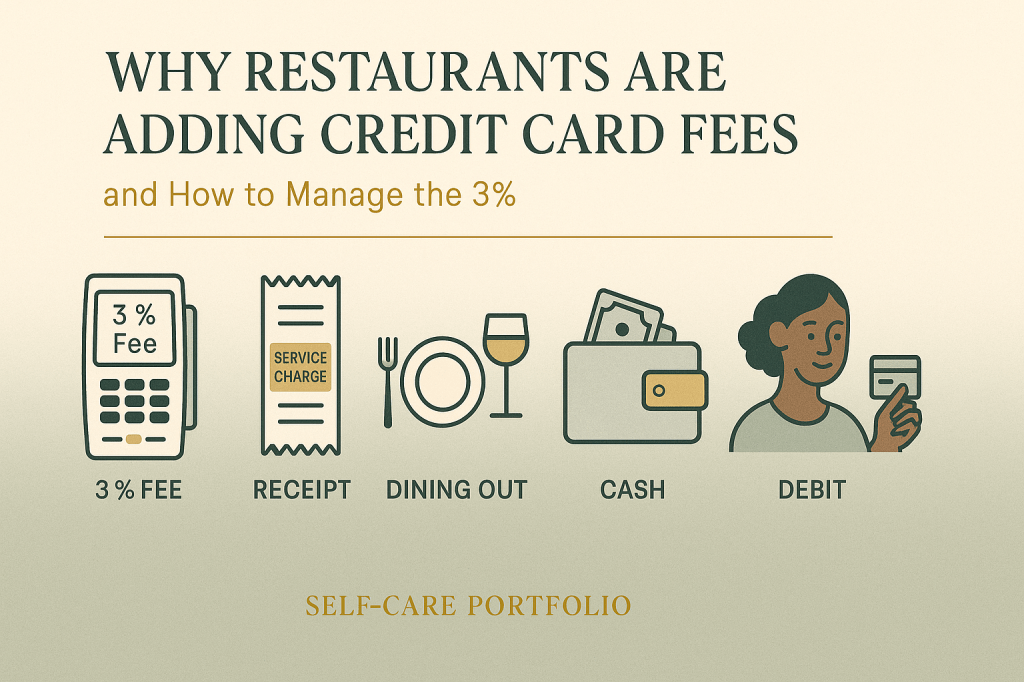
Lately, I’ve been thinking about how easy it is to swipe without really seeing. Convenience has become second nature tap, sign, skip receipt, and move on. But every so often, a small line on a receipt catches my eye: “3% CC Fee.” It’s never much in the moment, but it’s a quiet reminder of how easy it is to spend without paying attention.
Those little charges have started showing up everywhere at restaurants, on Grubhub or DoorDash, even when buying movie tickets online. They slip in quietly until you scroll through your receipts and realize how much those “just a few dollars” moments actually cost.
And honestly, with grocery prices rising the way they have, every mindful choice matters a little more. Pickup helps me stick to what’s actually on my list instead of impulse, adding extras online and skipping delivery fees softens the dent of those higher prices. Small shifts like that have made the budget total feel a bit less unpredictable.
I’ve been thinking about fighting back with a simple plan: pulling out $100 in cash every two weeks just for restaurant spending. I haven’t quite made the switch yet I still love the convenience of cards but I’ve started adjusting where I can.
Lately, I’ve been using my debit card more often since, as my mom pointed out, most places don’t charge the extra fee when you pay that way. It’s a small change, but it keeps those 3% charges from quietly stacking up.
For delivery, I’ve cut down to once a month (a huge improvement from before). Moving back home with family has helped with that too. I contribute toward food expenses, but it’s still far more cost-effective than the constant ordering I used to do when living alone. For groceries, I try to skip delivery altogether and do pickup instead especially if I schedule early on weekends so I don’t get too tired during the week and justify delivery.
As for as movies, I go maybe three to five times a year, so the online “convenience fee” feels worth it. But those smaller, repeated charges? I’m learning to plan around them one mindful change at a time.
The Bigger Picture: Why the 3% Exists
Credit card fees have always existed restaurants and small businesses pay around 2–3% to process every swipe or tap. For years, most businesses absorbed the cost as the “price of convenience.” But as inflation and operating costs climbed, many began passing that fee directly to customers.
Essentially, that 3% charge you see on your restaurant bill is the business saying, “We can’t keep eating the cost.”
What Counts as a “Fee” Now
- Service Fee – Covers credit card processing or labor costs (common in restaurants).
- Convenience Fee – Added when you pay online instead of in person (movie tickets, concert sites).
- Delivery Fee – Covers third-party logistics (Grubhub, DoorDash, grocery apps).
Each of these is small, but together they can quietly inflate your monthly spending especially if they’re tied to convenience habits.
Practical Ways to Reduce the Damage
- Go Cash-First (or Debit-First) for Certain Categories.
If restaurants or coffee shops often add card fees, try paying with debit instead or pull a small amount of cash every two weeks if that works better for you. Both create awareness around spending and make those “small extras” easier to track. - Opt for pickup instead of delivery.
It’s a simple reset that saves on fees, gets you out of the house, and keeps you mindful about where your money goes. - Schedule Errands Early.
Planning ahead (like weekend grocery pickups) prevents weekday “I’m too tired” purchases. - Use Rewards Strategically.
If you do pay by credit card, choose one with cash-back rewards that offset the fee (1–3% cards can neutralize costs). - Review receipts occasionally.
Even if you usually skip getting one, taking a moment to check your receipts once in a while helps you stay aware of how small fees add up.
🪞 Self-Care Takeaways
💰 Financial Well-Being: Noticing those 3% fees and small service charges builds financial awareness. Mindful spending isn’t restriction it’s self-trust.
💡 Skill Development: Tracking small leaks in your budget strengthens your awareness muscle; every review builds confidence in your own systems.
💚 Physical Well-Being: Planning pickups or early grocery runs reduces decision fatigue and mid-week stress it’s one less thing weighing on your energy.
🎨 Creativity & Expression: Turn home cooking into a small ritual; experiment with recreating favorite takeout meals for a sense of comfort and control.
🌿 Community & Connection: Support local spots that offer discounts during the week it keeps dining out intentional and budget-friendly. I recently went to Fiery Crab and found an autumn special on their site: a $23 seafood boil instead of my usual $40. When I picked it up, I noticed they also have a “buy one, get one” deal every 23rd of the month. Small discoveries like that make dining feel rewarding and cost-effective.
🔍 FAQ
Q: Why is everyone charging 3% for credit cards?
Because businesses pay roughly 2–3% in processing fees to credit card companies. Many small businesses now pass that cost to customers instead of absorbing it.
Q: When did restaurants start charging credit card fees?
The practice became common after 2020, when pandemic-era profit margins tightened and digital payment use surged.
Q: Who pays the 3% credit card fee?
The customer does when the business passes it on otherwise, the merchant pays it directly to the credit card processor.
📝 Journal Prompt
Where do small “convenience” fees show up most in your life and what habit could you adjust this month to minimize them? Think about one area (like dining, delivery, or online purchases) where a mindful change could help you save more intentionally.
📬 Subscribe
Want more Solo-Money reflections and self-care strategies for building a sustainable financial life? Subscribe below to get updates when new posts go live.
Related reads:
Solo-Money Series: How I’m Managing Student Loan Interest Coming Back – selfcareportfolio
Solo-Money Series: Spending Habits and Self-Worth (My Story as a Single Earner) – selfcareportfolio
 selfcareportfolio