
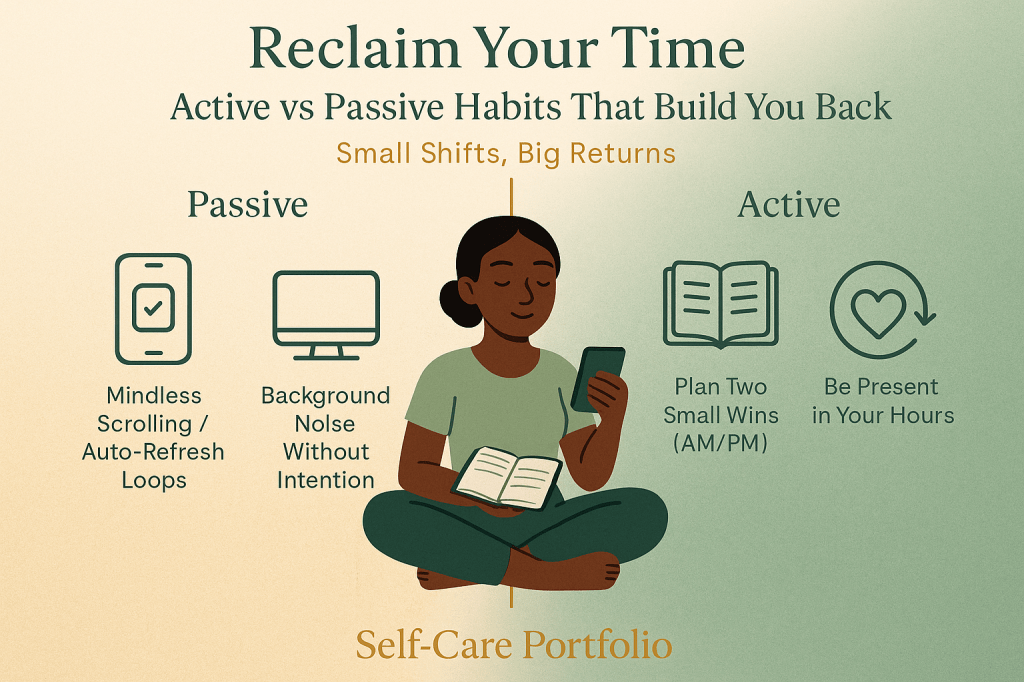
We often say we don’t have enough time. But what if the real shift comes from noticing how we’re spending the time we already have and whether it’s doing anything for us?
Lately, I’ve been asking myself: Is this moment mine, or am I just filling it?
I often say I don’t have enough time to do things outside of my 9–5, but the truth is, a lot of that time gets used passively: scrolling, letting old TV reruns play in the background, or jumping between endless tabs (this blog and my socials included).
Recently, I started thinking about time the way I think about money: there’s passive time and there’s active time. Both have a place but only one builds something back.
Active vs Passive Time: A Personal Reframe
For me, passive time looks like waiting on notifications, endlessly refreshing tabs, or letting the same reality TV reruns play in the background just for noise. It’s not always harmful, but it is automatic. And sometimes, it feels like I’m just fast-forwarding my life to get to the weekend.
That mindset unsettles me. I don’t want to live a life that’s only “on” during Saturdays and Sundays. The old saying comes to mind: The days are long, but the years are short. Passive habits make the days blur, and before you know it, another year is gone.
That’s why I’m trying to pivot toward active time moments that ask something of me and give something back. For me, this means getting intentional as I enter a busy new chapter: continuing my CPA coursework while maintaining my own well-being.
This semester, I’m leaning into:
- Structuring my weekdays with small, manageable tasks (Skill Development).
- Studying at the library or café at least 4 days a week to get out of the house and into a focused space (Community & Connection).
- Preparing the night before with clothes laid out, bag packed so I can’t talk myself out of showing up (Physical Well-Being).
Passive time isn’t the enemy sometimes it’s necessary recovery. But I noticed I wasn’t always choosing it. It was choosing me. Now, I want to choose how I show up in my time.
Your Self-Care Lens: Tracking Time Like You Track Wellness
To stay grounded, I’ve been experimenting with planners and journals that make time feel more tangible. For me, that’s a form of Creativity & Expression turning abstract hours into something visible and intentional.
- The 2 Tasks a Day: AM/PM Planner → born from burnout, simplified into one meaningful task in the morning and one in the evening. Two small wins a day = 14 per week.
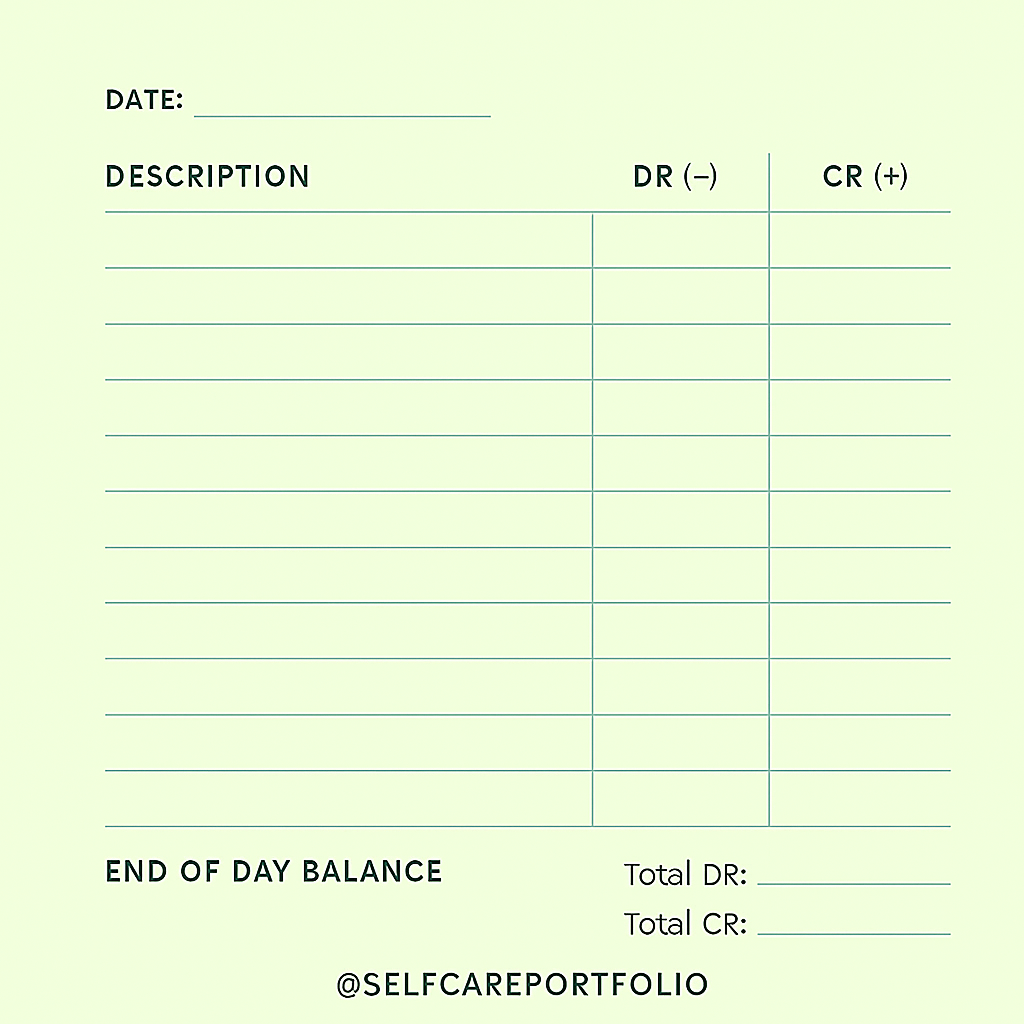
- The Self-Care Ledger → a journal-meets-ledger that tracks emotional debits and credits throughout the week.
A workout, a study session, or calling a friend? That’s a credit.
An hour of scrolling? Not a failure just a debit.
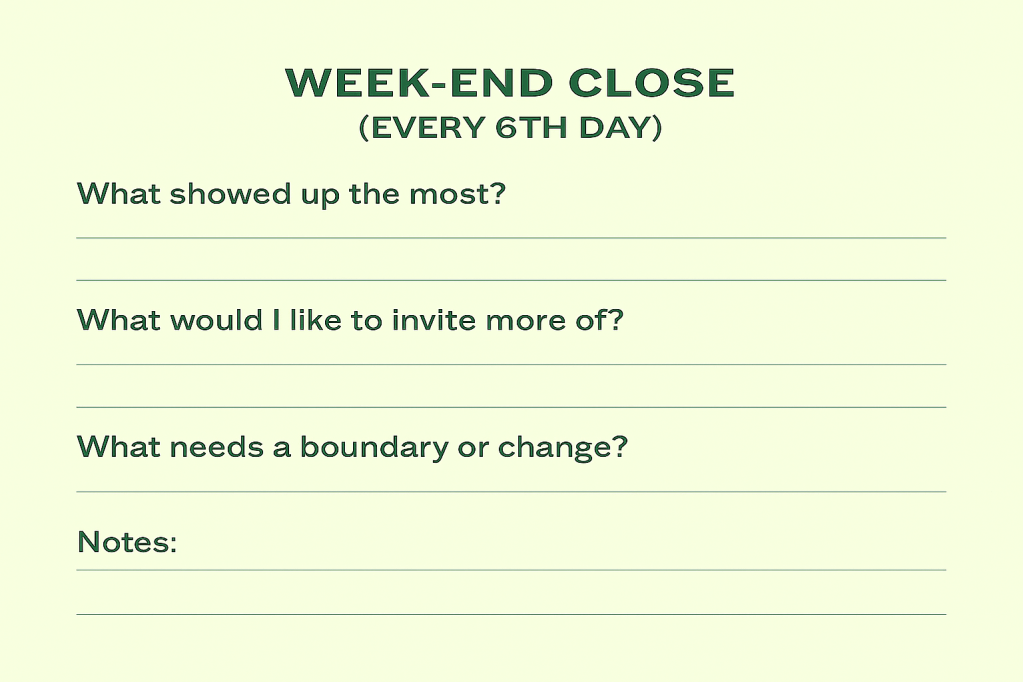
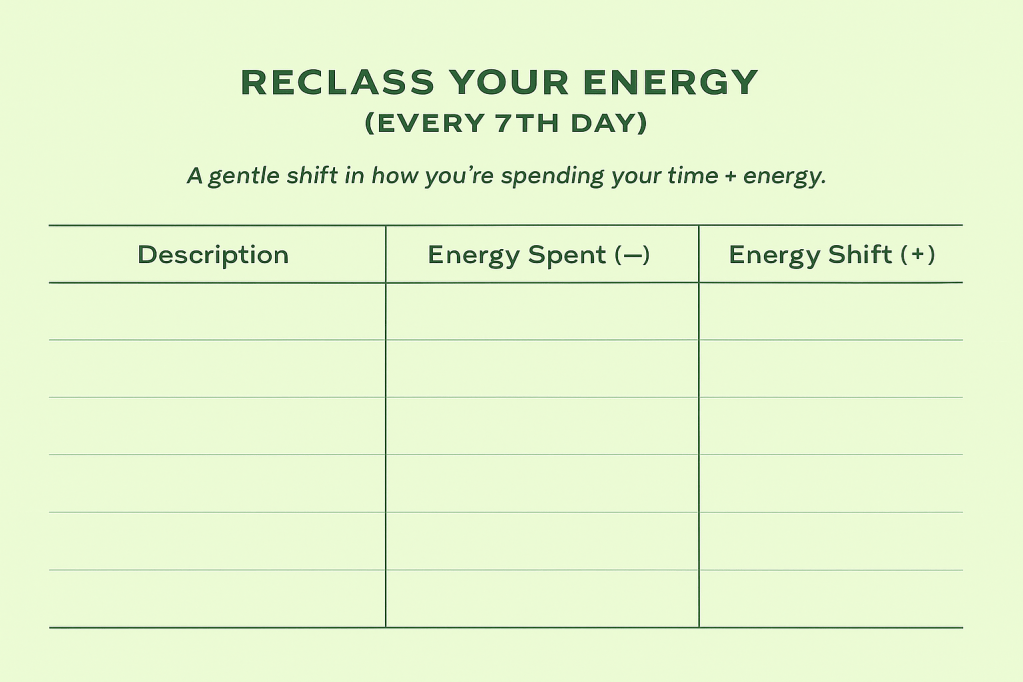
These tools aren’t available yet, but the act of testing them already gives me a benchmark. And for someone who used to live in their head? Putting it on paper feels like a real win.

A Shift Worth Trying
What’s one pocket of time you can shift this week from passive to active?
Even 15 minutes counts. Especially if it’s yours.
Just becoming aware of where your time goes can gently move you toward any goal without the pressure to be perfect.
Let’s stay present in the day, instead of watching the years fly by.
Small shifts, big returns.
FAQ
How do I stop passively scrolling?
For me, it starts with awareness. I set small interruptions (like alarms or moving my phone across the room) to break the autopilot loop. Replacing just 15 minutes of scrolling with a walk, journaling, or even folding laundry makes me feel more grounded.
How to not waste time scrolling?
Scrolling itself isn’t always “bad” sometimes it’s rest. The key is choosing it on purpose. I try to ask: Am I resting or avoiding? If it’s rest, I let it be. If it’s avoidance, I redirect into something active that still feels light.
How do I stop wasting time?
I’ve learned that wasting time often comes from not deciding how to spend it. Using my AM/PM Planner method helps me anchor two small wins a day one in the morning, one at night so I don’t feel like my time slipped away completely.
How to decrease scrolling time?
Track it like money. Notice where it goes, then reclass a few minutes each day toward something that gives back (a walk, journaling, even stretching). Over time, those swaps add up.
Journal Prompt
Think about your past week: when did you choose active time, and when did passive time choose you? What’s one pocket of time you’d like to reclass this week?
💌 Subscribe to Self-Care Portfolio
If this post resonated, subscribe to the Self-Care Portfolio for more reflections, self-care experiments, and practical tools like the AM/PM Planner and Self-Care Ledger. Each post is a gentle reminder that progress doesn’t have to be perfect to count.
Related reads:
 selfcareportfolio