
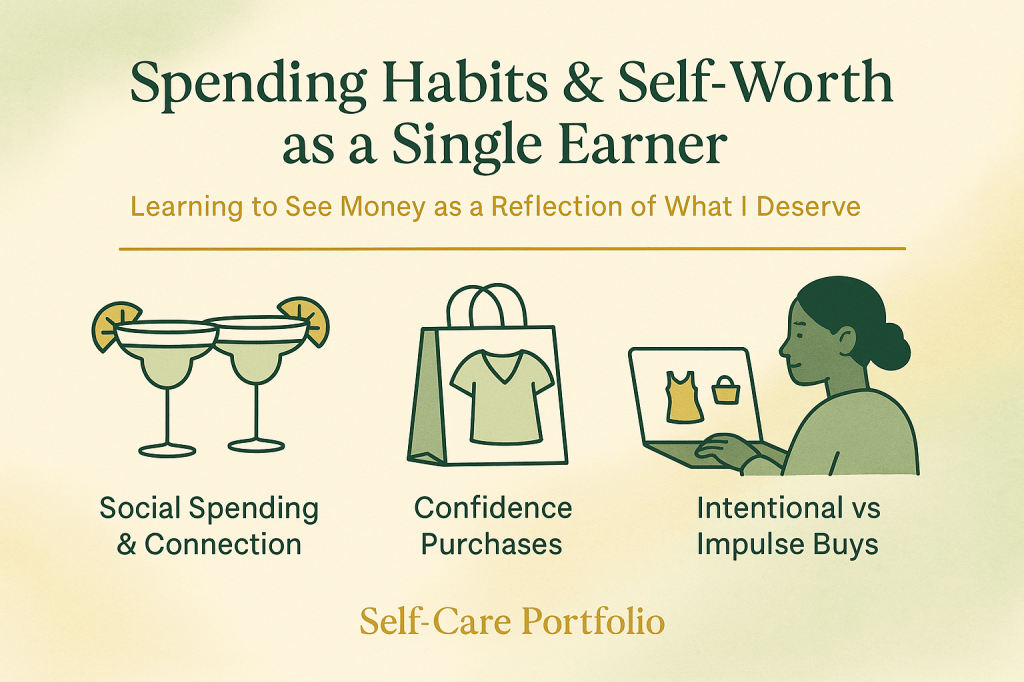
When I leaned deeper into self-care, I realized something surprising: my spending habits were telling me stories about my self-worth.
Building community, showing up for myself, or even having the confidence to walk into a room often required money. Brunches, pop-ups, and outfits that helped me feel grounded all carried a cost. And I started noticing that the way I spent or didn’t spend revealed what I thought I deserved.
That’s when it clicked: money and self-worth are deeply connected.
How I Learned to Spend with Intention (Skill Development)
When I started my first full-time job a decade ago, I had no system. My paycheck landed in one checking account with no plan. It was easy to overspend because everything felt available.
My first shift was simple: I opened a savings account and started moving anything above $300 per paycheck into it. Later, I automated the transfers and even added a certificate of deposit (CD) so I was “hiding money from myself.” Future me always said thank you.
This wasn’t just budgeting it was teaching myself structure. And structure gave me confidence.
Emotional Debits & Financial Tradeoffs (Community & Connection)
Recently, I started looking at money the same way I look at my Self-Care Ledger: as debits and credits. What adds to my peace? What drains it?
Example: I paid $1,250 for a summer class. That hurt in the moment, but it doubled as a credit toward my future it’s part of my CPA journey.
Another example: a $33 pickleball class sounded fun. But tuition already gave me access to free campus classes. Saying “no” to pickleball wasn’t rejecting joy it was choosing aligned tradeoffs that respected both my body and my budget.
Money and connection overlap here too. Sometimes saying yes to a dinner or class is really saying yes to community. But other times, protecting your budget is a way to protect your peace.
Why Spending Is Emotional, Not Just Math (Physical Well-Being)
Money touches identity. I’ve grown in financial wellness, but I still catch myself undervaluing my worth.
For example, I once renewed a lease without asking questions. The leasing agent told me, “You should always check if it’s the market rate.” That stuck with me.
It wasn’t just about rent it was about how often I default to gratitude instead of advocacy. The same shows up in job offers: I feel thankful just to be chosen and hope the money follows. But self-worth means asking for value now, not later.
This is where financial wellness and physical well-being connect. Stress from money shows up in your body. Anxiety, poor sleep, tension. Learning to advocate is not just financial care it’s physical care.
About the Solo-Money Series (Creativity & Expression)
This series grows alongside me. You’ll see posts about:
- the joy of well-planned purchases
- the sting of unexpected expenses
- how to reframe both with self-care
I especially write for single earners in the $40K–$80K range people often left out of financial conversations. My hope is that these reflections feel relatable, validating, and practical.
Self-Care Takeaway
Talking about money honestly is self-care.
Spending habits aren’t just about numbers they’re about values, identity, and how you see yourself.
You can be smart with money and kind to yourself at the same time.
FAQ
- What is financial self-care?
Financial self-care is more than budgeting. It’s noticing how your spending habits reflect your self-worth. For me, tracking emotional “debits and credits” helped me see which purchases drained me versus which added peace. - Is budgeting a form of self-care?
Yes. Creating a budget is one way to practice self-care, but it’s not just math. It’s about aligning your money choices with your values whether that means saving for stability or allowing yourself a small joy that boosts confidence. - How can I spend money more intentionally?
A practical tip: ask yourself before each purchase, “Does this add to my peace, or drain it later?” This mindset shift has helped me see spending as a reflection of my needs, not just numbers on a spreadsheet.
Journal Prompt
What’s one recent purchase that reflected your self-worth for better or worse? Did it add to your peace or quietly drain it?
💌 Subscribe to Self-Care Portfolio
Want more reflections like this? Subscribe below for updates on the Solo-Money Series, financial wellness tips, and self-care strategies you can apply right now.
Related reads:
 selfcareportfolio