Returning to school after nearly a decade stirred up emotions I wasn’t ready for.
💭 1. Back to School After a Decade: An Emotional Start
For years after undergrad, I’d wake up in a panic sure I had missed a quiz or failed an exam. That anxiety stayed with me long after graduation.
Even though it took me six years to finish my degree, I told myself I was done for good. But here I am again, back in class and those feelings resurfaced fast.
I assumed it was just procrastination. Maybe I wasn’t giving myself enough time to prepare. But even when I felt prepared, a small change in a question’s wording would throw me off completely. My brain would blank.
Eventually, I realized it wasn’t just testing anxiety. It felt like school might not be the right fit for me at all. But then another thought hit me:
What if the issue wasn’t when I studied… but how?
👩🏽💻 2. What Five Jobs Taught Me About Learning
In the last decade, I’ve worked five full-time jobs and a six-month part-time job. Each role forced me to adapt fast, and what I learned about work actually reshaped the way I study.
At first, I’d fill entire notebooks with step-by-step instructions:
- Open this file
- Click that system
- Run this report
That worked until something went wrong — a system update, a crash, a new format. And I’d freeze because I had memorized the steps, not the logic.
Then a trainer told me: “Don’t just write what I’m doing. Understand why I’m doing it.”
That clicked.
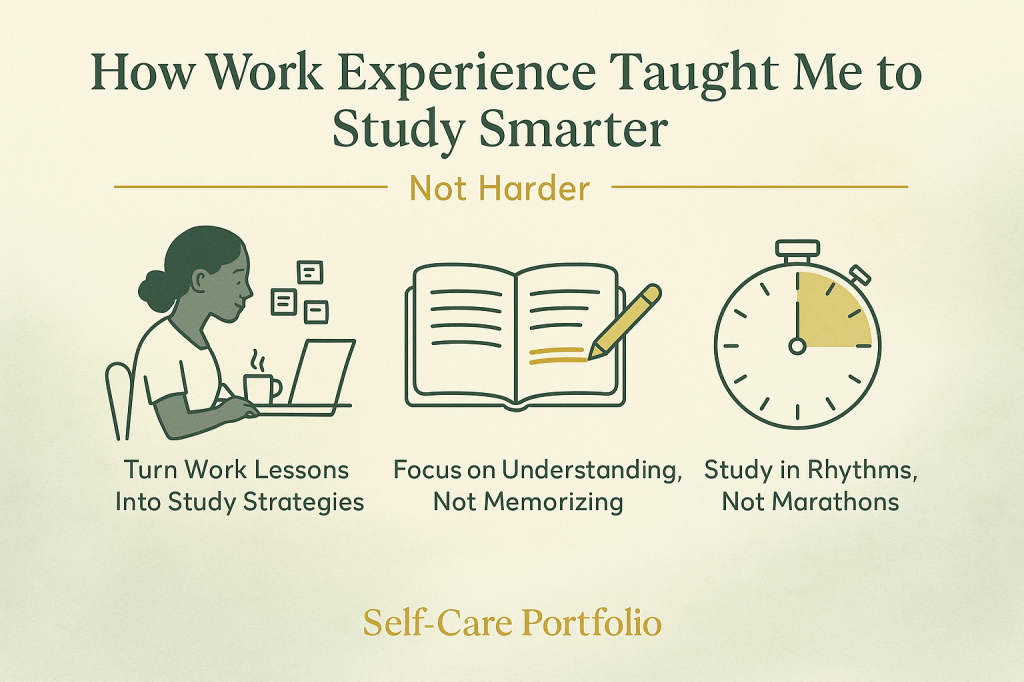
From then on, I focused on comprehension over memorization and that mindset now guides my studying too.
🧠 3. The Flashcard Burnout That Made Me Rethink Everything
When I returned to school, I leaned hard on flashcards. They covered my desk, spilled out of my bag, and took over my weekends.
But it didn’t work. After hours of effort, I was only reciting, not truly learning. One tax class brought it into focus: even after hours of studying, I froze on the exam when a question was worded differently.
That’s when I realized: the method was the problem, not me.
🧾 4. Rewriting My Way to Confidence
I shifted from flashcards to active reading, highlighting, and rewriting concepts in my own words.
When something didn’t click, I’d ask ChatGPT to “explain it like I’m five.” That one small step made even tough subjects manageable.
By my third exam, I had my highest grade yet. By the next course, I ditched flashcards entirely and ended with a B and way less stress.
This wasn’t just an academic shift. It was self-care.
🌱 5. Study Habits That Support Emotional Wellness
Here’s where the four pillars of my Self-Care Portfolio come in:
- Skill Development → Moving from memorization to comprehension made learning more sustainable.
- Physical Well-Being → Shorter, consistent study sessions kept me from burning out.
- Community & Connection → Leaning on coworkers, classmates, or even online explanations reminded me I wasn’t alone.
- Creativity & Expression → Rewriting concepts in my own words turned abstract ideas into something I could own.
This approach made studying less of a punishment and more of a practice.
⏳ 6. Gentle Tools That Actually Work
One tool from my life coach really worked: the Pomodoro Technique.
- Study for 25 minutes.
- Take a 5-minute break.
- After two rounds, take a longer 15-minute break.
Breaking up my time gave my brain rhythm and made studying feel doable.
🧩 7. This Shift Matters Especially Now
Balancing full-time work with classes isn’t easy. The old way of cramming felt like punishment. This new way feels purposeful.
Now I look forward to studying. I feel confident about reaching my 150 CPA hours. And most importantly, I feel calm something I never thought school could give me.
💬 8. What I’d Tell Someone Else
If you’re a working adult returning to school, you’re not alone.
- Focus on understanding > memorizing.
- Spread your studying out — consistency counts.
- Use tools like Pomodoro to avoid burnout.
- Write concepts in your own words.
It’s not just academic. It’s self-care.
🪞 9. Journal Prompt for You
What’s one area of your life where you’ve been memorizing steps instead of understanding the “why”? How might shifting to comprehension make it easier?
FAQ
How to study effectively as a working adult?
Break it down into smaller, consistent sessions. Use tools like Pomodoro, and focus on comprehension rather than rote memorization. Treat studying like training at a job practice builds skill.
How can I study without memorizing?
Reframe in your own words. Teach it back to yourself, or explain it to someone else. Highlighting concepts, rewriting notes, and asking “why” questions makes the knowledge stick.
What’s the best way to study while working full-time?
Plan short, focused study blocks on weekdays, then use weekends for deeper review. Pair it with wellness routines like walks, gym time, or journaling so you’re not running on empty.
Subscribe & Stay Connected
If this resonated, join me in Self-Care Portfolio. I share gentle productivity tips, Solo-Money reflections, and behind-the-scenes lessons from balancing school, work, and life.
Related reads:
 selfcareportfolio